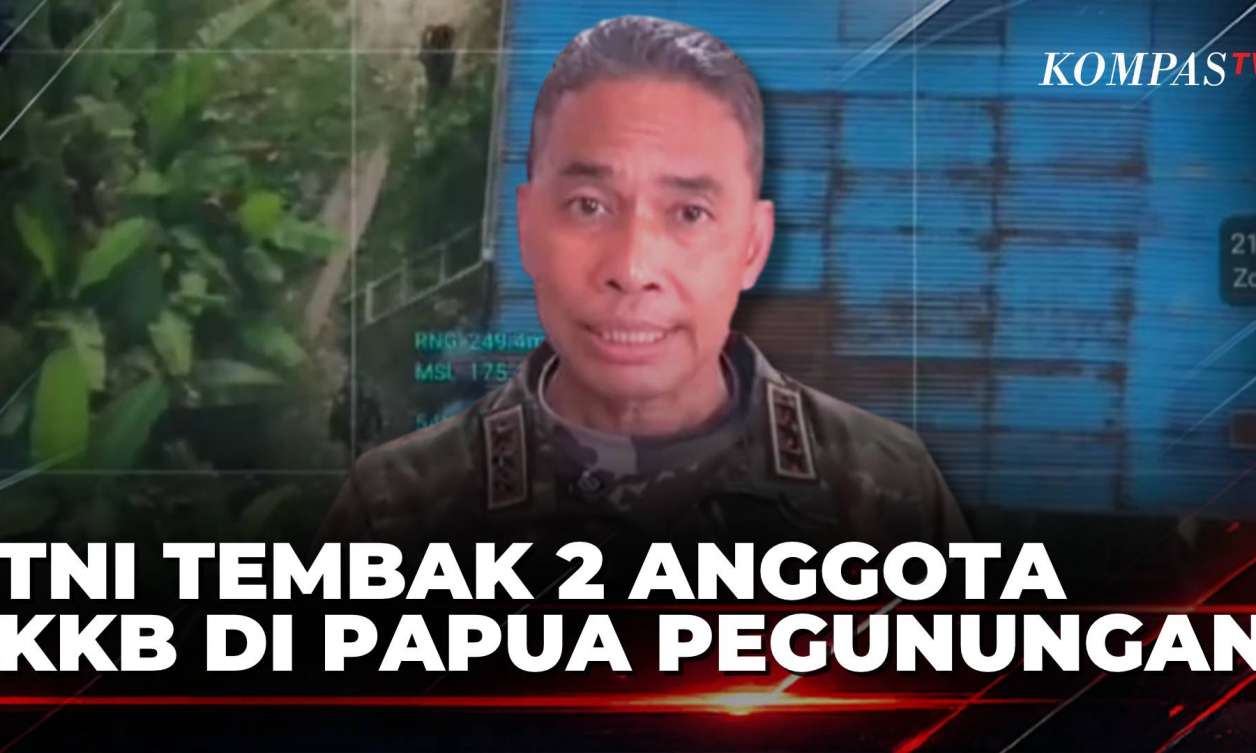
Two alleged members of an armed criminal group were killed in a firefight with Indonesian military personnel near Nonggoloid village in the Kenyam Complex of Papua Highlands, authorities said. The operation involved the Rajawali Six Task Force, operating under the Habema Operations Command and the Joint Regional Defense Command III.
According to the military, the encounter followed the detection of two men preparing firearms for an attack, as captured by a military drone.
The incident was linked by authorities to the group led by Wariambo Wandikbo, which has been identified by Indonesian security agencies as an armed criminal organization operating in the region. Lieutenant General Lucky Avianto, commander of Joint Regional Defense Command III, said the men were not civilians because they were carrying firearms and preparing to engage troops.
The account reflects the military’s initial assessment, while the report did not include an independent investigation or statements from the families of those killed.
As adapted from reporting by Kompas.tv, the clash took place in an area where security conditions remain a major factor in the delivery of public services and the movement of residents. Military personnel recovered cash amounting to tens of millions of rupiah, a modified air rifle capable of firing live ammunition, four boxes of ammunition and various bladed weapons from the location.
The seizure is expected to form part of the authorities’ continuing investigation into the group’s activities and supply networks.
Security and Access in a Challenging Region
For communities in Papua Highlands, security incidents can have consequences well beyond the immediate confrontation. Roads, air links and other transport routes are essential for bringing teachers, medical workers, food supplies and construction materials to remote settlements, yet insecurity can disrupt those connections and raise the cost of essential services.
Stable conditions are therefore closely tied to the region’s ability to sustain improvements in education, healthcare and local economic activity.
The operation also underscores the complicated environment in which the Indonesian government is pursuing development across Papua. Public investment in highland districts requires more than physical construction; it depends on reliable access, protection for workers and confidence among residents and service providers.
When security forces conduct operations, authorities face the parallel responsibility of protecting civilians, distinguishing combatants from noncombatants and ensuring that any use of force is subject to legal review and transparent accountability.
Implications for Community Development
According to reports published by Kompas.tv, the discovery of a firearm modified to fire live rounds and multiple ammunition boxes was central to the military’s account of the confrontation. Such findings indicate the potential for further violence, but they do not by themselves resolve wider questions about the causes of armed conflict or its impact on local communities.
A durable response must combine lawful security measures with dialogue, civilian protection and practical programs that expand livelihoods and public services.
Those priorities are particularly important in Papua Highlands, where distance and difficult terrain already complicate economic participation. Better roads, dependable communications, schools, clinics and opportunities for young people can help reduce isolation and strengthen communities’ ability to benefit from regional growth.
At the same time, development projects must be designed with local participation, respect for customary communities and safeguards for the environment so that infrastructure contributes to lasting rather than temporary progress.
The firefight near Nonggoloid is consequently both a security event and a reminder of the conditions that shape Papua’s development trajectory. The immediate task for authorities is to establish the facts, secure the area and protect residents from further harm, while maintaining access for humanitarian and public services.
Over the longer term, combining accountable security operations with education, healthcare, connectivity and inclusive economic opportunities will be essential to building a safer and more resilient Papua.